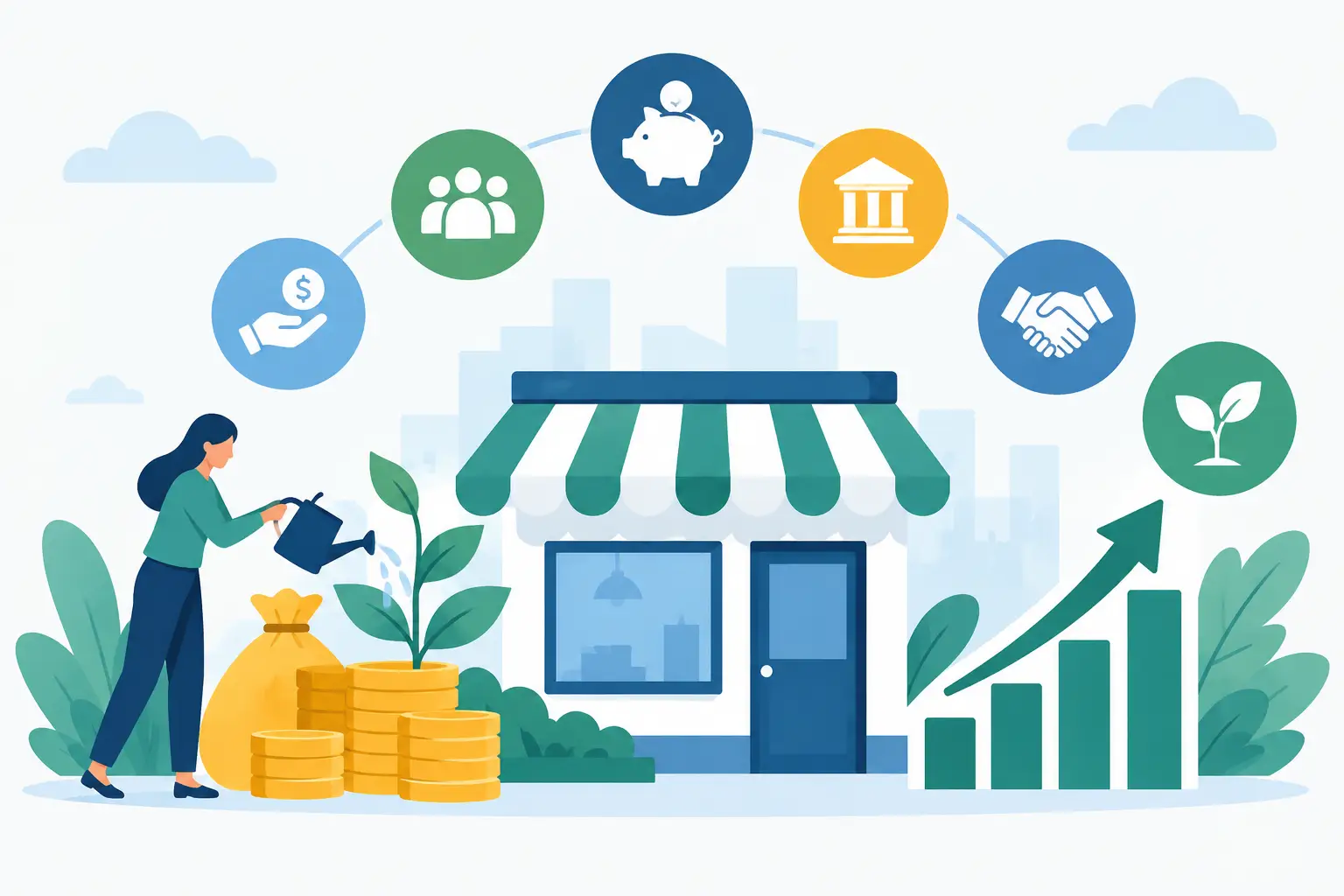
A new contract, a second location, a busy season, or a chance to buy inventory at the right price can change the direction of your business fast. The problem is that growth often requires spending money before the additional revenue arrives. Knowing the right ways to fund growth can help you act on real opportunities without draining the cash you need to keep daily operations moving.
For many small-business owners, a traditional bank loan is not the only answer – and it may not be the fastest one. If your credit is fair or challenged, the goal is not to force your business into a financing structure that does not fit. It is to match the funding to the purpose, your revenue, available assets, and repayment capacity.
1. Use a business line of credit for flexible expenses
A business line of credit gives you access to a set amount of capital that you can draw from when needed. Unlike a lump-sum loan, you generally pay interest only on the funds you use. As you repay the balance, the available credit may replenish.
This can be a practical option when growth creates ongoing or unpredictable costs. A contractor may use a line of credit to cover materials and payroll before a customer payment arrives. A retailer may use it for seasonal inventory purchases. A service business may use it to cover marketing, software, or temporary staff while building a new client base.
The trade-off is that rates and terms can vary, especially for businesses with lower credit scores or inconsistent revenue. A line of credit works best when you have a clear plan to repay each draw rather than treating it as permanent operating capital.
2. Choose a term loan for a defined expansion plan
A term loan provides a lump sum upfront that is repaid on a set schedule. It can make sense when you know exactly how much capital you need and what that capital will accomplish.
For example, a restaurant may need funds for a dining room renovation. A landscaping company may need working capital to launch service in a neighboring city. A professional services firm may need to hire several employees before a major contract begins. In each case, the cost is defined and the expected return is easier to estimate.
Before taking on a term loan, calculate more than the project cost. Account for the time it will take for the expansion to produce cash flow, the payment frequency, and a cushion for delays. Growth projects rarely follow a perfect schedule. The right payment should leave room for payroll, rent, taxes, and normal business surprises.
3. Finance equipment instead of paying cash
Equipment financing can help preserve cash when the asset itself is central to the growth plan. Vehicles, medical devices, commercial kitchen equipment, manufacturing machinery, construction equipment, and technology can all be expensive purchases. Paying the full amount in cash may leave the business undercapitalized just when it needs flexibility.
With equipment financing, the equipment often serves as collateral for the financing. That may make approval more accessible than an unsecured loan for some borrowers, although lender requirements still vary. The structure allows you to spread the cost over time while using the equipment to generate revenue.
This option is strongest when the asset has a useful life longer than the repayment term and will directly support sales, capacity, or efficiency. Be careful about financing equipment that will become outdated quickly or is unlikely to produce enough additional revenue to justify its cost.
4. Use revenue-based financing when sales are steady
Revenue-based financing is designed around a business’s sales activity. Rather than relying solely on a high credit score or traditional collateral, providers may evaluate revenue history, deposits, and overall business performance. Repayment is often structured around sales or frequent fixed payments, depending on the product.
It can be useful for businesses that generate regular card sales or bank deposits but do not fit a conventional bank’s underwriting model. Retailers, restaurants, transportation companies, and many local service businesses may consider this route when they need capital for inventory, staffing, marketing, or expansion.
Speed and accessibility are advantages, but repayment can be more demanding than owners expect. Review the total repayment amount, payment frequency, and the effect on your day-to-day cash flow. If your revenue is seasonal or already tight, a frequent repayment schedule may create pressure during slower weeks.
5. Turn unpaid invoices into working capital
If your business invoices customers and waits 30, 60, or 90 days to be paid, accounts receivable can slow down growth. Invoice financing or factoring can help convert eligible invoices into cash sooner, giving you money to cover payroll, supplies, or the next job while customers complete their payment cycles.
This approach is especially relevant for staffing firms, trucking companies, wholesalers, government contractors, and B2B service providers. The strength of your customers’ payment history may matter as much as your own credit profile in some arrangements.
The cost needs close attention. Funding invoices can be useful when the margin on a job supports the fee and early access to cash allows you to take on more profitable work. It is less appealing if slow-paying customers are a chronic issue that needs to be solved operationally.
6. Put inventory financing behind a sales plan
Inventory is often where growth capital gets tied up. A store may need to place a larger order before a holiday rush. A distributor may see an opportunity to buy at a discount. An online seller may need stock before launching a new product line.
Inventory financing can help fund goods that will be sold to customers. The key question is not simply whether you can buy more inventory. It is whether you can sell it within a realistic timeframe at a margin that supports the financing cost.
Use sales data, reorder history, seasonality, and supplier lead times to guide the decision. A large inventory purchase can increase revenue, but it can also trap capital in products that move slowly. Start with a demand-backed plan, not a hopeful forecast.
7. Use asset-based financing when your business owns value
Asset-based financing uses business assets such as accounts receivable, inventory, equipment, or sometimes real estate to support a financing facility. This can be a useful path for established businesses that own valuable assets but may not meet strict conventional credit standards.
A manufacturer with equipment and receivables, for instance, may have more borrowing options than its credit score alone suggests. A transportation company with titled vehicles may also have assets that can support capital for repairs, fleet expansion, or working capital.
Because assets are involved, lenders will typically evaluate their quality, value, and liquidity. Understand what is being pledged and what happens if payments are missed. Using assets can improve access to capital, but it also raises the stakes.
8. Combine financing with smarter cash flow management
Outside financing is only one part of funding growth. Better cash flow practices can reduce how much you need to borrow and make any financing easier to manage. Ask for deposits on large projects, invoice promptly, follow up on overdue accounts, negotiate supplier terms, and separate tax reserves from operating cash.
You do not have to fund every growth expense with one product. A business might use equipment financing for a vehicle, a line of credit for short-term material purchases, and improved invoicing practices to shorten the cash conversion cycle. Matching each expense to the right source of capital can protect both your margin and your flexibility.
How to choose among ways to fund growth
Start with the purpose of the money. Long-life assets usually belong with longer-term financing. Short-term cash gaps may call for a line of credit, invoice financing, or revenue-based funding. A one-time expansion project may be better suited to a term loan.
Then look at the repayment source. Will the financing be repaid from a signed contract, recurring monthly sales, inventory turnover, or savings created by new equipment? If the answer is unclear, borrowing may be premature. A lender can provide capital, but the business still needs a realistic path to repay it.
Finally, compare more than the approved amount. Review the total cost, payment schedule, collateral requirements, prepayment terms, and effect on your operating cash. Fast funding matters, but a payment structure that strains the business can turn a good opportunity into a difficult one.
Good credit or bad credit, financing options may be available when your business has operating history, revenue, or assets to show. With access to a network of 75+ lending partners, Bad Credit Business Loans can help business owners explore options based on their actual situation, not just a single credit score.
The next growth opportunity may not wait for perfect conditions. Build a clear use-of-funds plan, know the cash flow the investment should create, and pursue capital that gives your business room to move forward.