A new work truck, commercial oven, excavator, dental chair, or point-of-sale system can create revenue fast. But the way you finance it affects your monthly cash flow, tax planning, flexibility, and long-term costs. When weighing an equipment lease versus loan, the right answer is not always the option with the lowest advertised payment. It is the structure that lets your business use the asset without putting pressure on the rest of your operation.
For business owners with fair or challenged credit, the decision can feel even more urgent. Traditional banks may focus heavily on credit history and require a long application process. Equipment financing can be more accessible because the equipment itself helps secure the transaction. Good credit or bad credit, there may be financing paths worth considering when the purchase supports a clear business need.
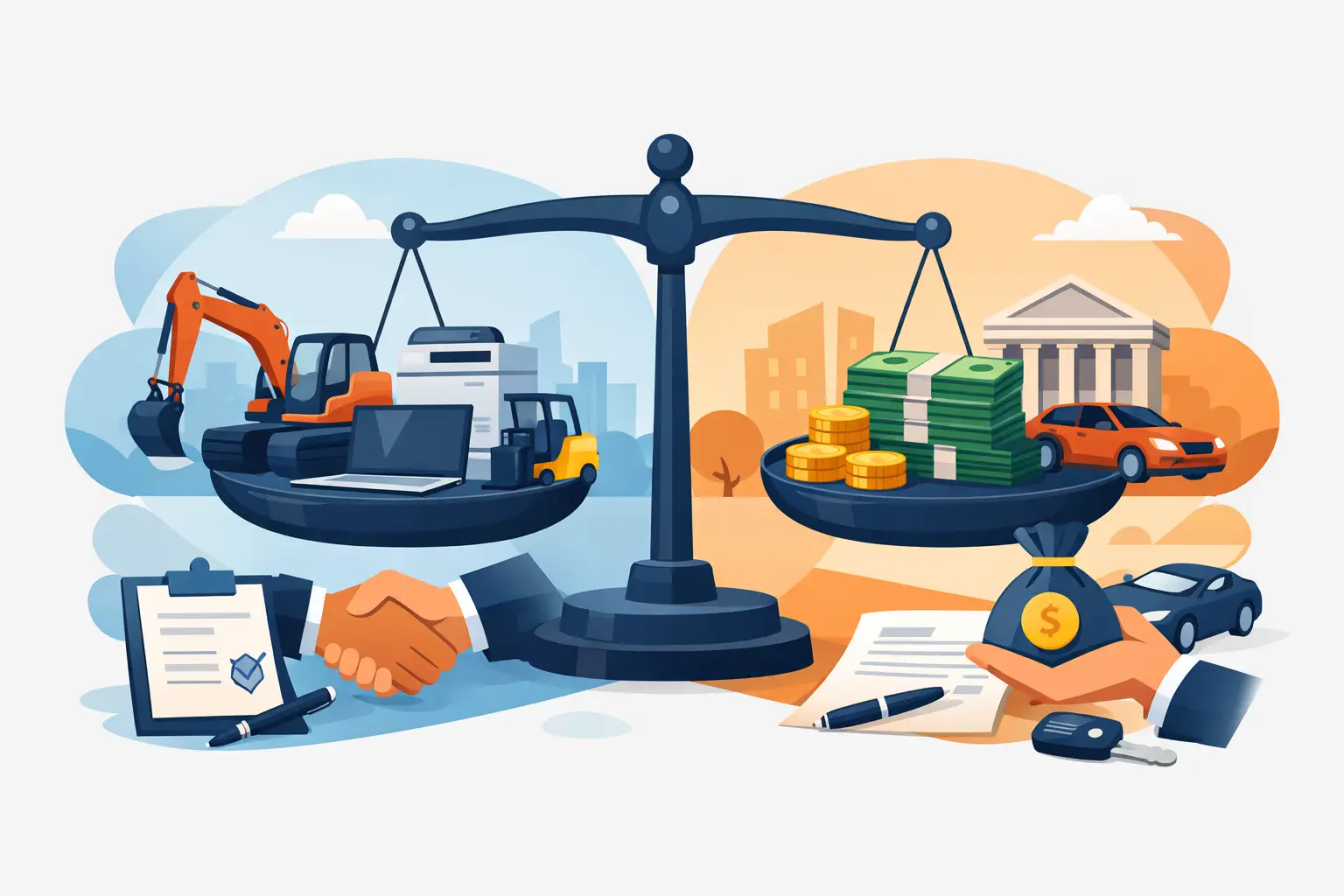
Equipment Lease Versus Loan: The Core Difference
An equipment loan is financing used to buy an asset. You select the equipment, borrow the purchase amount or a portion of it, and make scheduled payments over a set term. Once the loan is paid off, you own the equipment outright. The equipment usually serves as collateral, which can make this structure easier to qualify for than some unsecured business funding options.
An equipment lease gives your business the right to use the asset for a defined period. The leasing company generally owns the equipment during the lease term. At the end, you may return it, renew the agreement, upgrade to newer equipment, or purchase it if the agreement includes a buyout option.
That distinction matters most when you ask one question: Do you need to own this equipment for years, or do you primarily need to use it now?
A paving contractor buying a durable skid steer that will stay productive for a decade may lean toward a loan. A medical office replacing technology that could become outdated in a few years may find a lease more practical. Neither option is automatically better. The useful choice depends on the asset, your cash flow, and the terms you are offered.
When an Equipment Loan Makes Sense
A loan often fits businesses buying equipment with a long useful life. Think delivery vehicles, manufacturing machinery, restaurant fixtures, construction equipment, or tools that should keep producing income well after the financing term ends.
Ownership is the primary advantage. After the final payment, the business owns an asset it can continue using, sell, trade in, or use as part of future financing discussions. If the equipment is central to your work and unlikely to become obsolete quickly, ownership can deliver better value over time.
Loans can also be easier to understand. You borrow a defined amount, pay principal and interest, and work toward full ownership. Some lenders may require a down payment, while others can offer high advance rates depending on the equipment, borrower profile, time in business, and revenue.
The trade-off is that monthly payments may be higher than lease payments for the same piece of equipment. You are paying toward ownership, not just use. You also take on the risk of depreciation, maintenance, repairs, and resale value. If the equipment becomes outdated or your needs change unexpectedly, you still have the loan balance to manage.
A loan may be the stronger fit if you expect to use the asset well beyond the repayment period, want to build business assets, and can support the payment without draining working capital.
When an Equipment Lease Makes Sense
Leasing is often about preserving flexibility. Because lease payments may be based on the equipment’s expected value at the end of the term, they can sometimes be lower than loan payments. That can leave more cash available for payroll, inventory, rent, marketing, fuel, or seasonal expenses.
This structure can make sense for assets that evolve quickly. Technology, specialized software-connected equipment, office systems, and certain medical or manufacturing tools may need replacement before their physical life is over. A lease can create a more predictable upgrade path, helping your business avoid being stuck with equipment that no longer meets customer expectations.
A lease may also help when upfront cash is limited. Instead of tying up capital in a major purchase, you can put the equipment to work and pay over time. For a growing business, that can be the difference between accepting new jobs and turning them away.
Still, a lower monthly payment does not automatically mean a lower total cost. If you lease equipment for multiple terms or exercise a buyout option, the total paid can exceed what you would have paid with a loan. End-of-term responsibilities also vary. Some agreements require you to return the equipment in acceptable condition or pay charges related to excess wear, usage, or early termination.
Before signing, understand whether the agreement is a true lease, a lease with a fair-market-value buyout, a fixed-dollar buyout, or an equipment finance agreement. An equipment finance agreement can look similar to a lease in payment structure but is generally designed for ownership at the end. The name alone does not tell you everything. The contract terms do.
Compare More Than the Monthly Payment
The fastest way to make a weak financing decision is to compare only the payment amount. A smaller payment may extend the term, include a large end-of-term buyout, or leave you without ownership of an asset you need every day.
Review the total amount paid over the full agreement, including any down payment, documentation fees, insurance requirements, buyout amount, and end-of-term charges. Ask whether the payment is fixed and whether early payoff is allowed. If it is, find out whether a prepayment penalty or minimum finance charge applies.
You should also look at the expected useful life of the equipment. Financing a machine for five years may be reasonable if it should remain reliable for eight or 10. Financing rapidly aging technology for that long may create a problem. You could still be making payments after the equipment no longer gives your business a competitive edge.
Cash flow deserves equal attention. A larger down payment or a shorter term can reduce financing costs, but it should not leave your business short on operating cash. Equipment is supposed to help you produce more revenue. If the payment makes it harder to cover normal business expenses during a slow month, the structure may need to change.
Approval Factors for Owners With Credit Challenges
Credit matters, but it is not the only part of an equipment financing decision. Lenders commonly consider the type and condition of equipment, time in business, business revenue, existing obligations, and your ability to make the payment. Revenue-producing equipment can be easier to finance than highly specialized assets with limited resale value.
New equipment often has a clearer value and may qualify for stronger terms. Used equipment can still be financeable, especially when it comes from a reputable dealer and has a useful remaining life. However, older assets may require more documentation, a larger down payment, or a shorter repayment term.
If your credit profile is less than perfect, be prepared to explain the business case. Show how the equipment will replace rental costs, increase production, add routes, reduce downtime, or allow you to take on work you currently cannot handle. A lender wants to see a payment source, not just a purchase request.
Business owners with a 550+ credit score and at least one year in business may have options through a broad lending network, even if a traditional bank has said no. Bad Credit Business Loans works with 75+ lending partners to match qualified applicants with financing based on their credit, revenue, operating history, asset, and purpose for funding. An instant pre-approval can help you see available paths before you commit to a dealer or purchase agreement.
Questions to Ask Before You Sign
Ask the financing provider whether the agreement ends with ownership, a buyout option, or required return of the equipment. Confirm the exact payment, term length, total repayment amount, down payment, and all fees. If you are leasing, ask what happens if you need to end the agreement early or if the equipment is damaged, stolen, or no longer needed.
Also ask your equipment vendor for the full out-the-door price, warranty information, installation costs, delivery charges, and expected maintenance needs. Financing the machine but forgetting installation, permits, accessories, or training can create an unexpected cash gap.
Finally, consider whether the equipment will generate enough additional monthly gross profit or expense savings to comfortably cover its payment. Do not rely on a best-case sales forecast. Use a realistic estimate based on your current customer demand and operating capacity.
The best financing choice is the one that keeps your business working now while protecting your options later. If a lease preserves cash for a critical growth period, that flexibility has value. If a loan lets you own a durable asset that will earn for years, that value is equally real. Secure an instant pre-approval, compare the actual terms, and choose the payment structure that helps your next piece of equipment become a productive part of the business rather than another obstacle.