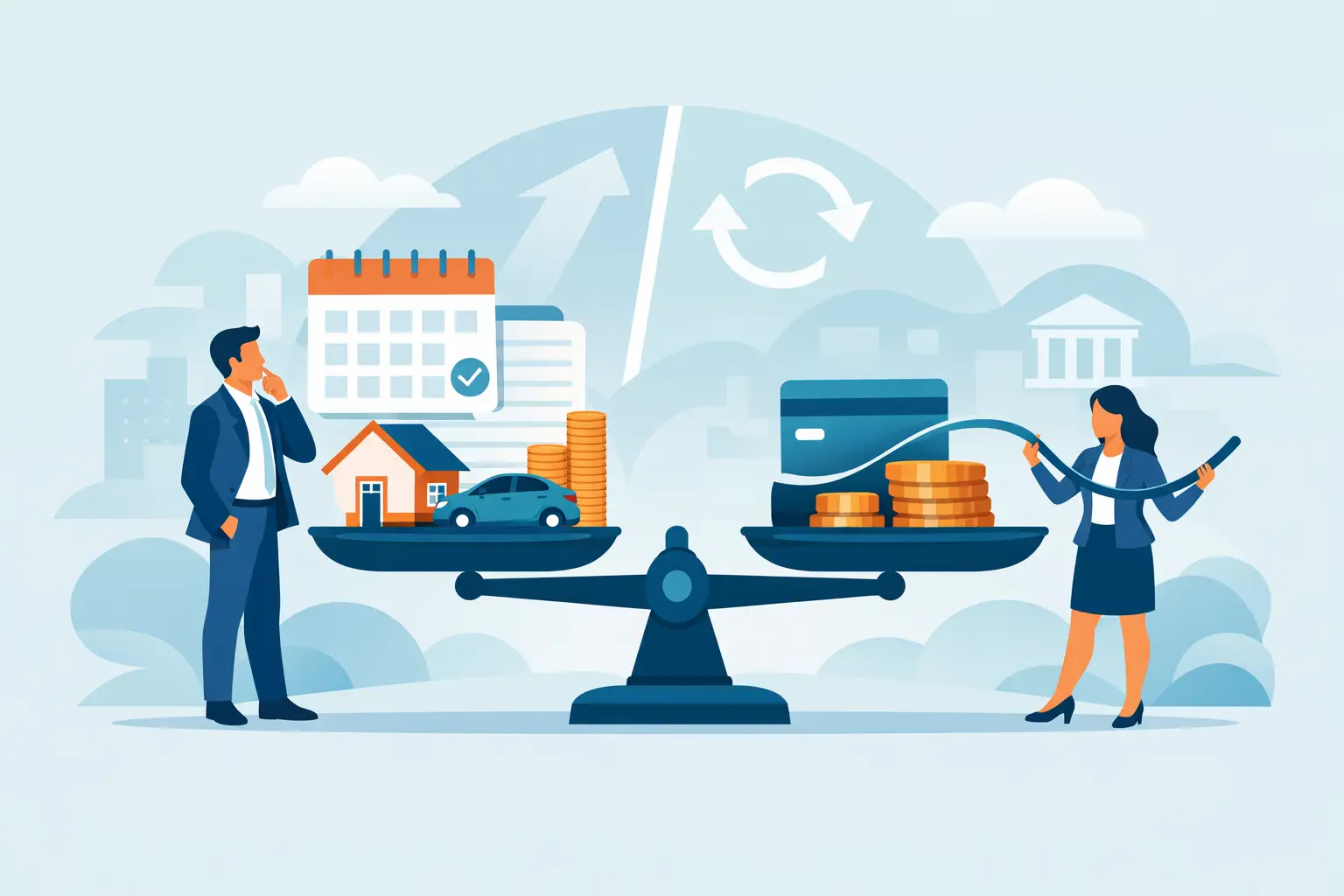
A broken delivery van, a seasonal inventory opportunity, and a slow-paying customer can all create a cash crunch. The right answer is not always more borrowing. When comparing a term loan versus credit line, the key question is whether you need one defined amount for a specific purpose or flexible access to capital as expenses arise.
For many small-business owners, especially those who do not meet a bank’s strict credit standards, choosing the right structure can make funding easier to manage. Both options can support growth and working capital, but they work very differently once the money hits your account.
Term Loan Versus Credit Line at a Glance
A term loan provides a lump sum upfront. You agree to repay that amount, plus the cost of financing, on a set schedule. Depending on the lender and product, payments may be weekly, biweekly, or monthly. The repayment term may range from months to several years.
A business line of credit gives you access to an approved borrowing limit. You draw only the amount you need, when you need it, up to that limit. As you repay the balance, available credit may become available again, subject to the terms of the agreement.
Put simply, a term loan is usually built for a known, one-time expense. A credit line is usually built for recurring or unpredictable business costs.
When a Term Loan Makes More Sense
A term loan can be a practical fit when you know exactly how much capital you need and can connect that funding to a clear return. Think of a contractor buying a work truck, a restaurant renovating its kitchen, or a retailer placing a large inventory order before a busy season.
Because you receive the full amount at closing, a term loan can help you complete a project without repeatedly applying for smaller amounts of financing. It also gives you a defined payoff path. You know the payment schedule from the start, which can make budgeting more straightforward.
Term loans are often a strong choice for expenses such as equipment, vehicles, renovations, technology upgrades, expansion costs, or a large bulk purchase. If the asset or investment will generate revenue over time, matching it with installment payments can make operational sense.
There is a trade-off. You begin repaying the full funded amount right away, whether you use every dollar immediately or not. Borrowing too much can put unnecessary pressure on cash flow. Before accepting an offer, compare the payment amount against your average weekly or monthly revenue, not just your best sales period.
A practical term loan example
Suppose a landscaping company needs $60,000 to purchase two mowers, a trailer, and related equipment before spring. The total cost is known, and the equipment will support additional jobs for several seasons. A term loan can provide the full $60,000 upfront while the company repays it over an agreed period.
Using a credit line for the same purchase could work, but it may not be the cleanest structure if the entire amount is needed at once and the business needs predictable installment payments.
When a Business Credit Line Is the Better Tool
A credit line is designed for the normal gaps and surprises that come with operating a business. You may need to cover payroll while waiting for invoices to clear, order materials for a new job, replace a failed piece of small equipment, or manage a temporary dip in sales.
Instead of taking a full lump sum, you can draw what you need. If your approved limit is $50,000 and you need $12,000 for inventory, you borrow $12,000 rather than the entire limit. This may reduce your financing cost compared with taking a larger loan than you currently need, though fees and terms vary by lender.
A line of credit can be especially useful for businesses with uneven revenue. Transportation companies may face fuel and repair costs before customer payments arrive. Retailers often need inventory before a sales rush. Service businesses may have steady payroll obligations while client invoices are outstanding.
The trade-off is that a credit line requires discipline. Easy access to funds can lead to using credit for long-term purchases that should have been financed with a term loan. If you continuously draw the line just to cover permanent operating losses, the problem is not timing. It is a cash-flow issue that needs a broader plan.
A practical credit line example
Consider an electrical contractor with reliable jobs but payment terms of 30 to 60 days. Material suppliers expect payment faster than customers pay invoices. A line of credit can bridge that timing gap: draw funds for materials, complete the job, collect the invoice, and repay the draw.
That is very different from financing a major vehicle purchase. A vehicle is a long-term investment, while a credit line is generally better suited to short-term operating needs.
Compare the Cost Beyond the Rate
The lowest advertised rate does not always produce the best financing choice. Review the full offer, including the total financing cost, payment frequency, term length, origination fees, draw fees, maintenance fees, prepayment terms, collateral requirements, and any personal guarantee.
For a term loan, focus on whether the scheduled payment fits your business during slower months. A short repayment period can create a high payment even when the funded amount looks manageable.
For a credit line, ask how interest or fees are calculated on draws and whether unused-credit or annual fees apply. Also find out whether the line is revolving, whether it has a maturity date, and what happens if the lender reduces or does not renew the limit.
Financing offers are not one-size-fits-all. Owners with strong credit, long operating histories, and stable revenue may qualify for more options. But fair or challenged credit does not automatically eliminate access to business funding. Lenders may also evaluate time in business, monthly revenue, cash flow, outstanding obligations, industry, and available assets.
How to Choose Between a Term Loan and Credit Line
Start with the purpose of the money. If you can write down the purchase amount, the expected return, and a realistic repayment timeline, a term loan may be the better fit. If your need changes week to week and you want capital available before a gap becomes an emergency, a credit line may offer more flexibility.
Ask yourself these questions before you apply:
- Is this a one-time investment or an ongoing operating expense?
- Do I need the entire amount now, or only access to funds when needed?
- Can the business handle fixed payments during a slow month?
- Will the financing be repaid from a specific project, asset, or customer payment?
- Would a revolving balance solve a timing issue, or hide a deeper cash-flow problem?
You may need both at different stages of growth. For example, a trucking company could use a term loan to acquire a vehicle and keep a credit line available for fuel, maintenance, and short-term working capital. The goal is to match each funding tool to the expense it is meant to support.
What to Prepare Before Applying
Better preparation helps lenders understand your business and can speed up the matching process. Have recent business bank statements available, along with basic details on your monthly revenue, time in business, existing financing, and the purpose of the funds. If you are financing equipment or a vehicle, a quote or purchase agreement can also help.
Be direct about your credit profile and current obligations. The right lending partner is not necessarily the one promising the biggest number. It is the one offering terms your business can realistically repay without disrupting payroll, vendor relationships, or daily operations.
Bad Credit Business Loans works with a network of more than 75 lending partners to help eligible business owners explore term loans, lines of credit, and other financing options. Stated eligibility begins at a 550+ credit score and one year in business, though approval and terms depend on lender review and your business profile.
A term loan can fund the next major move. A credit line can keep the business moving between those moves. Choose the option that supports your revenue cycle, protects your cash flow, and gives you room to operate with confidence.