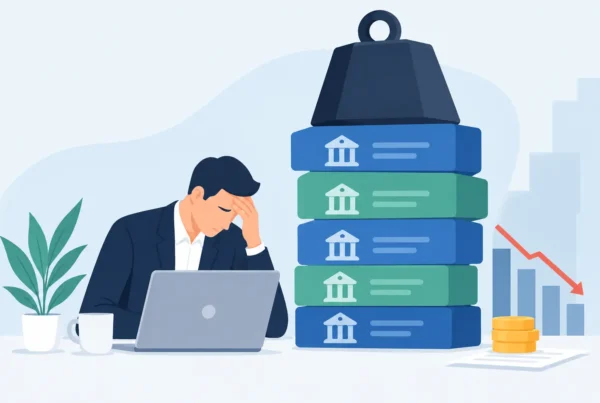
A daily or weekly loan payment can drain a healthy business faster than many owners expect. When several advances, credit cards, or short-term loans come due at once, cash that should pay suppliers, payroll, or inventory gets pulled in too many directions. Learning how to refinance business debt can give you a clearer payment structure and more room to run the business.
Refinancing is not automatically the right move just because a payment feels difficult. The goal is to replace existing debt with financing that improves your overall position – whether that means a lower payment, a longer repayment term, fewer due dates, a better rate, or funding structured around your revenue. The right answer depends on your cash flow, credit profile, time in business, and the debt you are replacing.
What refinancing business debt actually means
Business debt refinancing means using a new loan or financing product to pay off one or more existing business obligations. In some cases, this is a straightforward replacement of one loan with another. In others, it is debt consolidation: one new facility pays off multiple balances, leaving you with one payment instead of several.
For example, a contractor might have an equipment loan, two business credit cards, and a short-term working capital advance. Those payments may be manageable during a busy season but restrictive when receivables slow down. A refinance could combine eligible balances into a term loan with a fixed monthly payment, making cash flow easier to forecast.
The benefit is not always a lower total cost. Extending the repayment period can reduce the monthly payment while increasing the total amount paid over time. That trade-off can still make sense if it helps the business protect payroll, fulfill customer orders, or avoid taking on more expensive short-term debt.
How to refinance business debt step by step
Start with a full debt inventory
Before applying, list every business debt obligation in one place. Include the current balance, payment amount, payment frequency, payoff amount, interest rate or factor rate if available, remaining term, and any early payoff fees.
Do not overlook merchant cash advances, business credit cards, equipment leases, tax payment plans, or loans that are personally guaranteed. A lender needs an accurate view of your current obligations to determine whether a refinance will improve your payment capacity. This exercise also shows whether a single high-cost balance is causing most of the pressure.
Look beyond the monthly payment. A loan with a small payment can still be expensive if it has a long term or a high rate. A daily payment can be especially disruptive for businesses with uneven sales cycles, even when the balance itself is not large.
Define the result you need
Refinancing works best when you know what problem you are solving. You may need lower monthly payments, fewer automatic withdrawals, a longer term, a fixed payment, or a structure that better matches seasonal revenue.
A restaurant preparing for a slower winter may prioritize payment relief. A trucking company with steady contracts may want to consolidate high-frequency advances into a monthly term loan. A retailer with strong upcoming sales may simply need to remove an expensive short-term balance before placing inventory orders.
Be specific about the target. If your business needs to reduce debt payments by $2,000 per month to stay comfortably cash-flow positive, that is more useful than asking generally for the lowest rate. It helps you compare offers based on what the business can realistically support.
Review your business and personal financial picture
Lenders commonly review time in business, monthly or annual revenue, bank activity, existing debt, industry, personal credit, and sometimes business credit. They may also look at collateral, invoices, equipment, or card sales depending on the financing type.
A lower credit score does not necessarily end the conversation. It may affect the products, terms, and pricing available to you. Businesses with challenged credit often have better results when they can show consistent deposits, stable revenue, improving performance, or valuable assets.
Gather recent business bank statements, a government-issued ID, basic business details, and current debt statements or payoff letters. Having clean records can speed up the process and reduce surprises after a preliminary approval.
Compare the structure, not just the advertised rate
When you compare refinance offers, focus on the full repayment picture. Ask how much will be used to pay existing debt, how much new working capital you will receive if any, the payment frequency, the total repayment amount, and whether there are origination or closing costs.
A lower rate does not always mean a better deal if fees are high, the term is too short, or the payments are still too frequent. On the other hand, taking the longest possible term may improve immediate cash flow but add substantial cost over time.
Make sure you understand whether the new lender pays creditors directly or sends funds to your business. Direct payoff can simplify consolidation. If funds are sent to you, pay off the old balances promptly and keep confirmation that the accounts are closed or reduced as agreed.
Choose a product that fits the debt and the business
A term loan is often used for consolidating or refinancing debt because it provides a defined amount, regular payments, and a set payoff schedule. It can be a practical choice for businesses with stable revenue that want predictable monthly obligations.
A business line of credit may fit better when debt pressure comes from recurring working capital gaps. It can help a business draw funds as needed, though it is usually not the best tool for permanently paying off a large existing balance unless the repayment plan is clear.
Equipment financing can be useful when a vehicle, machine, or technology asset is central to the debt situation. Because the equipment helps secure the financing, it may offer terms that differ from unsecured options. Asset-based financing may also help businesses that have receivables, inventory, or other qualifying assets but limited credit strength.
Revenue-based financing can be an option for companies with steady card sales or deposits that need a payment structure tied to revenue. However, review the total repayment amount and how deductions will affect your operating cash. It is not automatically cheaper than a loan, and it should not create another cycle of frequent withdrawals.
When refinancing may not be the right move
Refinancing is less helpful when the new financing only postpones a larger problem. If the business is losing money every month because pricing, overhead, staffing, or demand has changed, replacing debt alone may not fix the issue. First identify what must change operationally.
It may also be a poor fit if your current loan has a substantial prepayment penalty, you are close to paying it off, or the new offer adds more total cost without meaningful payment relief. In that situation, negotiating with current creditors, reducing expenses, or waiting until revenue improves may be smarter.
Be cautious about taking extra cash during a refinance simply because it is available. Additional working capital can be valuable for inventory, repairs, or a revenue-producing investment. It is less useful when it covers ongoing losses with no plan to correct them.
Common refinancing mistakes to avoid
The biggest mistake is treating debt consolidation as a fresh start without changing the habits that created the payment strain. If high-interest cards are paid off and then immediately charged back up, the business can end up with both the new refinance payment and new card balances.
Avoid signing before you know the exact payoff figures for existing lenders. A quoted balance may differ from the true amount needed to close an account. Also, do not assume every lender will refinance every kind of obligation. Certain advances, tax debts, liens, and personally held balances may require a different approach.
Finally, do not let one decline stop the process. Traditional banks often use tight credit and documentation standards. A broader lending network can identify options based on revenue, operating history, assets, and credit profile rather than relying on one approval model.
Get clear on your refinance options
If your business has been operating for at least one year and you have a 550+ credit score, refinancing may be within reach even if a bank has said no. Bad Credit Business Loans works with 75+ lending partners to match qualified owners with financing options based on real business conditions, not a perfect credit story.
Bring your current balances, recent bank activity, and the payment outcome you need to the conversation. A quick pre-approval can help you see which structures may be available before you commit to a plan. Secure an Instant Pre-Approval, review the numbers carefully, and choose financing that gives your business room to keep moving forward.