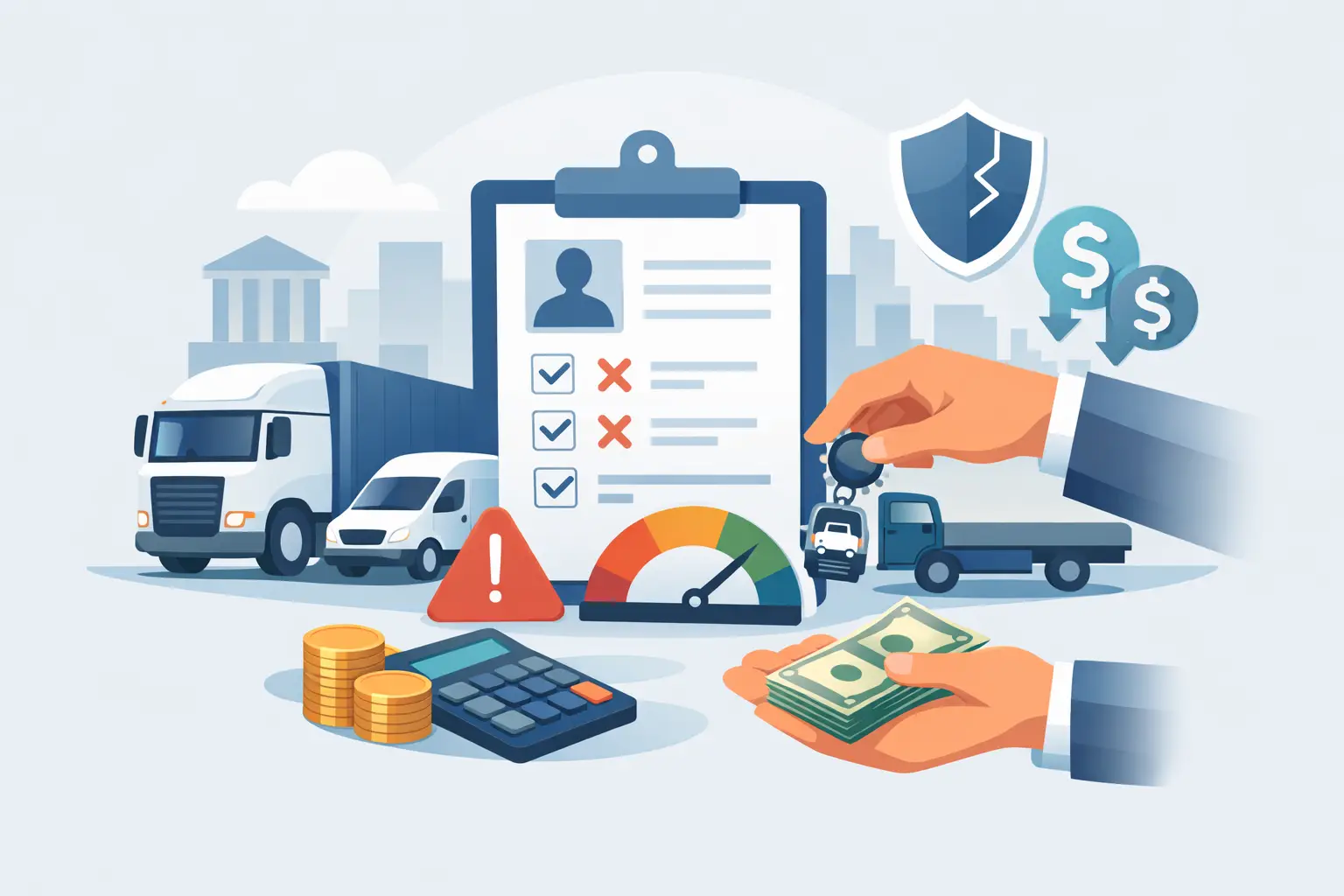
A broken-down service van, an aging delivery truck, or a new contract that requires another vehicle can put a business owner in a difficult position. You need transportation to generate revenue, but traditional banks may focus heavily on a credit score that does not reflect where your business is now. Commercial vehicle financing bad credit options can give established businesses a practical path to purchase or replace revenue-producing vehicles without draining cash reserves.
For many small businesses, the vehicle is not a convenience. It is the job site, the delivery route, the mobile storefront, or the equipment that gets a crew to work. The right financing structure can help you act on an opportunity while keeping working capital available for payroll, fuel, inventory, insurance, and day-to-day operations.
How Commercial Vehicle Financing With Bad Credit Works
Commercial vehicle financing is designed for business-use vehicles, including work trucks, cargo vans, box trucks, trailers, delivery vehicles, and specialized vehicles used in trades or transportation. In many cases, the vehicle itself serves as collateral. That can make financing more accessible than an unsecured loan because the lender has a tangible asset supporting the transaction.
Bad credit does not automatically mean no financing. It does mean lenders may look more closely at the full picture: time in business, monthly revenue, cash flow, existing debt, vehicle value, down payment, and the purpose of the purchase. A business with consistent deposits and a clear need for a vehicle may have options even if the owner’s personal credit is less than perfect.
The terms you receive will depend on risk. Applicants with challenged credit may face a higher rate, a larger down payment, a shorter repayment period, or limits on the age and mileage of the vehicle. Those trade-offs deserve careful attention. Financing that gets a truck on the road quickly can be valuable, but only if the payment fits your business’s realistic cash flow.
When Vehicle Financing Makes Sense
Financing is often a strong fit when the vehicle will directly support revenue or improve operations. A plumbing company may need another van to add a technician. A delivery business may need a box truck to take on a larger route. A contractor may replace an unreliable pickup that causes missed jobs and costly downtime.
It can also make sense when paying cash would leave the business too thin. Using every available dollar for a vehicle may create a new problem if an unexpected repair, slow-paying customer, or payroll deadline arrives the following month. A structured payment can preserve liquidity, provided the vehicle’s expected revenue supports the monthly obligation.
On the other hand, financing may not be the best move if the purchase is based on a vague plan rather than confirmed demand. Before applying, estimate how many additional jobs, deliveries, or billable hours the vehicle will produce. Then compare that figure with the payment, insurance, fuel, maintenance, registration, and any driver costs.
Financing Options for Business Vehicles
The best option depends on the vehicle, how quickly you need it, and how your business earns revenue. A lender network can be especially useful for owners with bad credit because different lenders weigh credit, collateral, and business performance differently.
Equipment Financing
Equipment financing can be used for qualifying business vehicles and may be structured around the value of the asset. The vehicle typically secures the financing, which can help businesses that do not want to pledge other assets. This option is commonly used for work trucks, vans, trailers, and specialized commercial equipment.
A down payment may be required, particularly when credit is challenged or the vehicle is older. Still, putting money down can reduce the amount financed and may improve the likelihood of approval. Be sure to ask whether the lender has restrictions on vehicle age, mileage, title status, or dealer versus private-party purchases.
Term Loans
A business term loan provides a lump sum that can be used to buy a vehicle. Unlike vehicle-specific financing, it may offer more flexibility if the purchase includes related expenses such as upfitting, shelving, tools, branding, or initial insurance costs.
The trade-off is that an unsecured term loan may place more emphasis on credit and revenue, and pricing can be higher for borrowers with weaker credit. It can be a practical choice when the vehicle purchase is part of a broader expansion plan rather than a standalone transaction.
Asset-Based Financing
Asset-based financing uses business assets as support for funding. Depending on the lender and the business, eligible assets may include vehicles, equipment, receivables, or inventory. This can be useful for established companies that have valuable assets but do not meet conventional bank credit standards.
Because the collateral matters, documentation and valuation can affect the process. The asset must have enough value to support the requested amount, and the lender may require proof of ownership or other records.
Revenue-Based Financing or a Business Line of Credit
If you already own the vehicle but need cash for repairs, a down payment, fleet expansion costs, or operating expenses, revenue-based financing or a business line of credit may be worth considering. These products are not always tied directly to the vehicle, but they can help solve the cash-flow side of a vehicle purchase.
Revenue-based financing can move quickly for businesses with steady sales, though it may cost more than conventional financing. A line of credit can provide flexibility for ongoing expenses, but the available limit and pricing will depend on the business profile. Use these options with a clear repayment plan rather than relying on them to cover a payment your business cannot sustain.
What Lenders May Review Beyond Your Credit Score
A credit score is one factor, not the entire decision. Lenders want to understand whether the business can make its payments and whether the vehicle purchase supports a sound operating need. Strong bank deposits, stable revenue, time in business, and a well-defined purchase can all strengthen an application.
Prepare to share basic business information, recent bank statements, identification, vehicle details if you have selected one, and documents showing your business entity when applicable. Some lenders may also request tax returns, profit-and-loss statements, insurance information, or a quote from the dealer.
A clean, consistent application matters. Revenue figures, bank statements, and business details should align. If there was a past credit issue caused by a one-time event, be ready to explain it briefly and factually. Do not overpromise. A lender is more likely to work with a business owner who presents a clear and accurate financial picture.
Steps to Improve Your Approval Position
Start by setting a realistic vehicle budget. Consider the full cost of ownership, not just the purchase price. A lower-priced vehicle with frequent repairs may cost more over time than a dependable unit with a manageable monthly payment.
Next, calculate a down payment you can make without disrupting operations. Even a modest down payment can show commitment, reduce the financed balance, and help offset credit concerns. If possible, choose a vehicle that is easy to value and has a strong resale market. Lenders are generally more comfortable with vehicles they can readily assess.
It also helps to separate business and personal finances before applying. Use a dedicated business bank account, keep deposits organized, and avoid unexplained overdrafts where possible. These habits will not erase past credit challenges overnight, but they can make your current operating performance easier to verify.
Finally, compare the total financing cost, payment schedule, prepayment terms, collateral requirements, and any fees. The lowest monthly payment is not always the best deal if it extends repayment too long or carries expensive terms. Focus on financing that keeps your business moving without creating pressure on every operating cycle.
Get Matched to a Financing Path That Fits
Business owners with fair or poor credit should not have to assume that vehicle growth is out of reach. At Bad Credit Business Loans, qualified applicants can be matched with financing options through a network of more than 75 lending partners, with eligibility beginning at a 550+ credit score and one year in business.
Secure an Instant Pre-Approval with accurate information about your revenue, time in business, credit profile, and vehicle needs. The goal is not simply to get approved. It is to put a dependable, revenue-producing vehicle on the road with a payment your business can carry confidently.