A slow-paying customer should not force you to delay payroll, turn away a job, or leave profitable inventory on the shelf. A business line of credit with a low credit score can give an established company room to handle those gaps without applying for a new lump-sum loan every time an expense appears.
For owners who have been declined by a bank, the right question is not simply, “Can I get approved?” It is, “Which lender and structure fit how my business earns, spends, and repays?” Credit matters, but it is only one part of the file. Revenue, time in business, cash flow patterns, existing debt, and the purpose of the funds can all affect your options.
What Is a Business Line of Credit?
A business line of credit is revolving working capital. You are approved for a maximum credit limit, then draw funds when your business needs them. As you repay what you use, that available credit may become available again, subject to your lender’s terms.
That makes a line of credit different from a term loan. With a term loan, you receive one lump sum and make scheduled payments on the full amount. With a line, you may use only part of your approved limit. For example, a contractor might draw funds to cover materials before a progress payment arrives, repay the draw after the customer pays, and use the line again for the next project.
A line can be useful for recurring, short-term operating needs such as payroll timing, supplier payments, seasonal inventory, repairs, marketing campaigns, or unexpected expenses. It is usually less suitable for a long-life asset, such as a truck, major piece of machinery, or commercial buildout. In those cases, equipment financing or a term loan may create a repayment schedule that better matches the value and useful life of the purchase.
Can You Get Business Line Credit With a Low Credit Score?
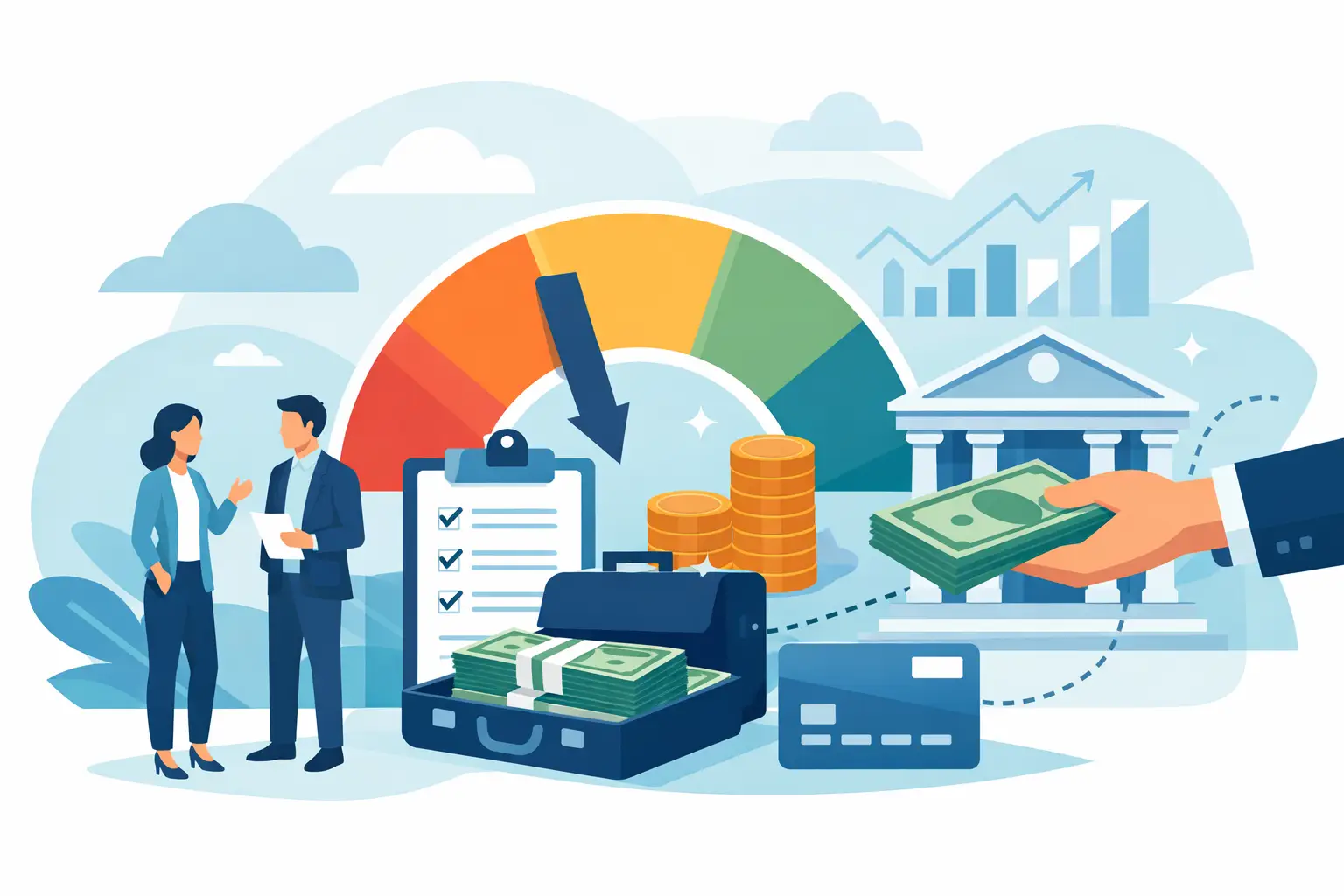
Yes, it may be possible, especially if your company has been operating for at least a year and can show consistent revenue. However, approval is not guaranteed, and lower credit can mean a smaller limit, shorter repayment terms, higher costs, or more frequent payments than a conventional bank line.
Traditional banks often place heavy weight on strong personal credit, years of profitable operations, collateral, and detailed financial records. Alternative lenders may take a broader view. They can evaluate recent business deposits, average monthly revenue, customer payment cycles, industry stability, and whether the requested credit amount makes sense for your operations.
That does not mean credit is ignored. A low score can signal past payment issues, high utilization, collections, or other risk factors. But a score does not always tell the whole story. A business owner may have faced a medical event, a failed prior venture, a temporary downturn, or personal debt while still operating a healthy business today.
Bad Credit Business Loans works with a network of more than 75 lending partners to help match established business owners with options that fit their profile. Eligibility can begin at a 550+ credit score and one year in business, though each lender sets its own underwriting standards and final requirements.
What Lenders May Review Beyond Your Score
When credit is challenged, strong operating evidence matters more. Lenders want to see that the business has a realistic ability to repay what it borrows.
Your bank statements are often central to that review. They can show regular deposits, revenue consistency, account balances, overdraft activity, and existing payment obligations. A business with predictable weekly or monthly deposits may present a stronger case than one with the same annual revenue but highly irregular cash flow.
Lenders may also consider your time in business. A company that has operated for two or three years has a track record that a startup does not. They may review the industry as well. A transportation company with contracted work, a restaurant with stable card sales, or a service business with recurring customers may have different financing options than a highly seasonal or speculative operation.
The amount you request matters, too. Asking for a manageable line tied to a clear purpose can be more compelling than requesting the largest possible limit. If you need $25,000 to stock proven fast-moving inventory, explain the sales cycle and expected payoff timing. If you need funds for payroll, show how upcoming receivables support repayment.
When a Line of Credit Is the Right Move
A line of credit works best when your funding need repeats and repayment is connected to normal business activity. It gives you a source of capital before a cash gap becomes an emergency.
Consider a line if you regularly deal with delayed invoices, need to buy inventory before busy periods, or have uneven monthly expenses. A local HVAC company, for instance, may use a line to prepare for summer demand. A retailer may use it to place a seasonal order early enough to secure supplier pricing. A trucking business may use it to cover fuel, repairs, and payroll while waiting on customer payments.
The key is discipline. Revolving credit is convenient, which can make it easy to use for expenses your business cannot repay quickly. Before drawing, identify the repayment source. It could be a customer invoice, a completed project, seasonal sales, or a predictable revenue cycle. If you cannot point to a credible payoff plan, a different financing product may be safer.
Know the Trade-Offs Before You Apply
Funding access is valuable, but no financing is free. With lower credit, compare the full cost and payment structure instead of focusing only on the approved limit. A large line that creates difficult daily or weekly payments can put more pressure on cash flow than a smaller, better-aligned option.
Ask how draws are repaid, whether fees apply when you access funds, whether there is an annual or maintenance fee, and whether unused credit has a cost. Confirm whether the rate or pricing is fixed or variable. You should also understand any personal guarantee, blanket lien, payoff restrictions, and minimum draw requirements.
Speed can be another trade-off. Alternative financing may move faster than a conventional bank process, but it can carry a higher cost. For urgent working capital that protects revenue or keeps operations running, that trade-off may be reasonable. For a purchase you can plan months in advance, you may have time to pursue a lower-cost option or improve your financial profile first.
Steps to Improve Your Approval Position
You do not need perfect credit to prepare a stronger application. Start by separating business and personal finances if you have not already done so. Depositing sales into a dedicated business account creates a clearer revenue record and helps lenders evaluate your actual operations.
Keep recent bank statements organized and be ready to explain unusual deposits, returned payments, or overdrafts. Review your current debt payments honestly. Existing financing is not an automatic disqualifier, but lenders will want to know whether another payment fits your cash flow.
It also helps to request an amount based on need, not hope. Map out the next 60 to 90 days of expenses, expected deposits, and the specific timing gap you want to cover. This gives you a practical borrowing target and keeps you from taking on more capital than the business can comfortably manage.
Finally, be direct about your credit history. A lender may see it anyway. A brief, factual explanation of a past issue, combined with evidence of stable current revenue, is more useful than avoiding the subject.
Secure Funding That Fits Your Business
A low credit score does not have to leave your business without options. If you have at least one year in business, a 550+ credit score, and revenue that supports repayment, a business line of credit may help you cover operating gaps and keep moving toward the next opportunity.
Secure an instant pre-approval to see what may fit your business. The best financing is not necessarily the biggest offer. It is the one that gives you usable working capital, a payment you can manage, and enough flexibility to keep serving customers without losing momentum.